Download as PDF, PPTX
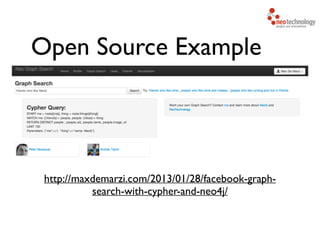
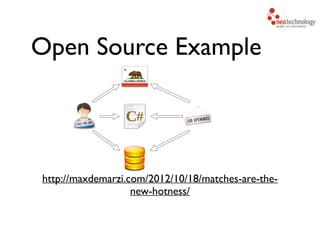
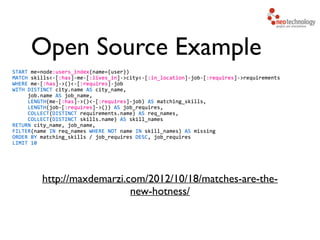
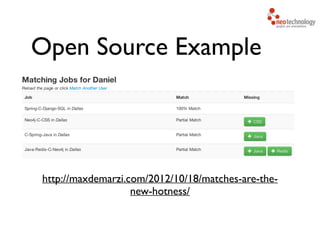
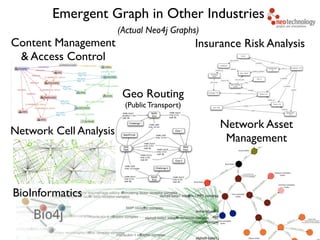


![MATCH (me:Person)-[:IS_FRIEND_OF]->(friend),
(friend)-[:LIKES]->(restaurant),
(restaurant)-[:LOCATED_IN]->(city:Location),
(restaurant)-[:SERVES]->(cuisine:Cuisine)
!
WHERE me.name = 'Philip' AND city.location='New York' AND
cuisine.cuisine='Sushi'
!
RETURN restaurant.name
* Cypher query language examplehttp://maxdemarzi.com/?s=facebook](/p?url=https%3A%2F%2Fimage.slidesharecdn.com%2Fgraphdatabaseusecases-140527143641-phpapp02%2F85%2FGraph-database-Use-Cases-29-320.jpg&__src=https%3A%2F%2Fwww.slideshare.net%2Fslideshow%2Fgraph-database-use-cases%2F35182978&__type=image)


![What is a
Graph Database
“A graph database... is an online database
management system with CRUD methods
that expose a graph data model”1
• Two important properties:
• Native graph storage engine: written
from the ground up to manage graph data
• Native graph processing, including
index-free adjacency to facilitate traversals
1] Robinson,Webber, Eifrem. Graph Databases. O’Reilly, 2013. p. 5. ISBN-10: 1449356265](/p?url=https%3A%2F%2Fimage.slidesharecdn.com%2Fgraphdatabaseusecases-140527143641-phpapp02%2F85%2FGraph-database-Use-Cases-43-320.jpg&__src=https%3A%2F%2Fwww.slideshare.net%2Fslideshow%2Fgraph-database-use-cases%2F35182978&__type=image)


![Cypher
LOVESA B
Graph PatternsASCII art
MATCH (A) -[:LOVES]-> (B)
WHERE A.name = "A"
RETURN B as lover](/p?url=https%3A%2F%2Fimage.slidesharecdn.com%2Fgraphdatabaseusecases-140527143641-phpapp02%2F85%2FGraph-database-Use-Cases-63-320.jpg&__src=https%3A%2F%2Fwww.slideshare.net%2Fslideshow%2Fgraph-database-use-cases%2F35182978&__type=image)

![Social Graph - Create
Practical Cypher
CREATE !
! (joe:Person {name:"Joe"}),!
! (bob:Person {name:"Bob"}),!
! (sally:Person {name:"Sally"}),!
! (anna:Person {name:"Anna"}),!
! (jim:Person {name:"Jim"}),!
! (mike:Person {name:"Mike"}),!
! (billy:Person {name:"Billy"}),!
! !
! (joe)-[:KNOWS]->(bob),!
! (joe)-[:KNOWS]->(sally),!
! (bob)-[:KNOWS]->(sally),!
! (sally)-[:KNOWS]->(anna),!
! (anna)-[:KNOWS]->(jim),!
! (anna)-[:KNOWS]->(mike),!
! (jim)-[:KNOWS]->(mike),!
! (jim)-[:KNOWS]->(billy)](/p?url=https%3A%2F%2Fimage.slidesharecdn.com%2Fgraphdatabaseusecases-140527143641-phpapp02%2F85%2FGraph-database-Use-Cases-65-320.jpg&__src=https%3A%2F%2Fwww.slideshare.net%2Fslideshow%2Fgraph-database-use-cases%2F35182978&__type=image)
![Social Graph - Friends of Joe's Friends
MATCH (person)-[:KNOWS]-(friend),!
(friend)-[:KNOWS]-(foaf) !
WHERE person.name = "Joe"!
AND NOT(person-[:KNOWS]-foaf)!
RETURN foaf !
Practical Cypher
foaf
{name:"Anna"}](/p?url=https%3A%2F%2Fimage.slidesharecdn.com%2Fgraphdatabaseusecases-140527143641-phpapp02%2F85%2FGraph-database-Use-Cases-66-320.jpg&__src=https%3A%2F%2Fwww.slideshare.net%2Fslideshow%2Fgraph-database-use-cases%2F35182978&__type=image)
![Social Graph - Common Friends
MATCH (person1)-[:KNOWS]-(friend),!
(person2)-[:KNOWS]-(friend)!
WHERE person1.name = "Joe" !
AND person2.name = "Sally"!
RETURN friend!
!
!
Practical Cypher
friend
{name:"Bob"}](/p?url=https%3A%2F%2Fimage.slidesharecdn.com%2Fgraphdatabaseusecases-140527143641-phpapp02%2F85%2FGraph-database-Use-Cases-67-320.jpg&__src=https%3A%2F%2Fwww.slideshare.net%2Fslideshow%2Fgraph-database-use-cases%2F35182978&__type=image)
![Social Graph - Shortest Path
MATCH path = shortestPath(!
(person1)-[:KNOWS*..6]-(person2)!
)!
WHERE person1.name = "Joe" !
! AND person2.name = "Billy"!
RETURN path!
!
Practical Cypher
path
{start:"13759", !
nodes:["13759","13757","13756","13755","13753"],!
length:4,!
relationships:["101407","101409","101410","101413"],!
end:"13753"}](/p?url=https%3A%2F%2Fimage.slidesharecdn.com%2Fgraphdatabaseusecases-140527143641-phpapp02%2F85%2FGraph-database-Use-Cases-68-320.jpg&__src=https%3A%2F%2Fwww.slideshare.net%2Fslideshow%2Fgraph-database-use-cases%2F35182978&__type=image)

![Network Management - Create
CREATE !
! (crm {name:"CRM"}),!
! (dbvm {name:"Database VM"}),!
! (www {name:"Public Website"}),!
! (wwwvm {name:"Webserver VM"}),!
! (srv1 {name:"Server 1"}),!
! (san {name:"SAN"}),!
! (srv2 {name:"Server 2"}),!
!
! (crm)-[:DEPENDS_ON]->(dbvm),!
! (dbvm)-[:DEPENDS_ON]->(srv2),!
! (srv2)-[:DEPENDS_ON]->(san),!
! (www)-[:DEPENDS_ON]->(dbvm),!
! (www)-[:DEPENDS_ON]->(wwwvm),!
! (wwwvm)-[:DEPENDS_ON]->(srv1),!
! (srv1)-[:DEPENDS_ON]->(san)!
Practical Cypher](/p?url=https%3A%2F%2Fimage.slidesharecdn.com%2Fgraphdatabaseusecases-140527143641-phpapp02%2F85%2FGraph-database-Use-Cases-70-320.jpg&__src=https%3A%2F%2Fwww.slideshare.net%2Fslideshow%2Fgraph-database-use-cases%2F35182978&__type=image)
![Network Management - Impact Analysis
// Server 1 Outage!
MATCH (n)<-[:DEPENDS_ON*]-(upstream)!
WHERE n.name = "Server 1"!
RETURN upstream!
Practical Cypher
upstream
{name:"Webserver VM"}
{name:"Public Website"}](/p?url=https%3A%2F%2Fimage.slidesharecdn.com%2Fgraphdatabaseusecases-140527143641-phpapp02%2F85%2FGraph-database-Use-Cases-71-320.jpg&__src=https%3A%2F%2Fwww.slideshare.net%2Fslideshow%2Fgraph-database-use-cases%2F35182978&__type=image)
![Network Management - Dependency Analysis
// Public website dependencies!
MATCH (n)-[:DEPENDS_ON*]->(downstream)!
WHERE n.name = "Public Website"!
RETURN downstream!
!
Practical Cypher
downstream
{name:"Database VM"}
{name:"Server 2"}
{name:"SAN"}
{name:"Webserver VM"}
{name:"Server 1"}](/p?url=https%3A%2F%2Fimage.slidesharecdn.com%2Fgraphdatabaseusecases-140527143641-phpapp02%2F85%2FGraph-database-Use-Cases-72-320.jpg&__src=https%3A%2F%2Fwww.slideshare.net%2Fslideshow%2Fgraph-database-use-cases%2F35182978&__type=image)
![Network Management - Statistics
// Most depended on component!
MATCH (n)<-[:DEPENDS_ON*]-(dependent)!
RETURN n, !
count(DISTINCT dependent) !
AS dependents!
ORDER BY dependents DESC!
LIMIT 1
Practical Cypher
n dependents
{name:"SAN"} 6](/p?url=https%3A%2F%2Fimage.slidesharecdn.com%2Fgraphdatabaseusecases-140527143641-phpapp02%2F85%2FGraph-database-Use-Cases-73-320.jpg&__src=https%3A%2F%2Fwww.slideshare.net%2Fslideshow%2Fgraph-database-use-cases%2F35182978&__type=image)


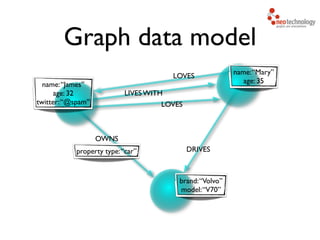
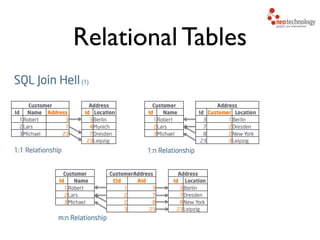
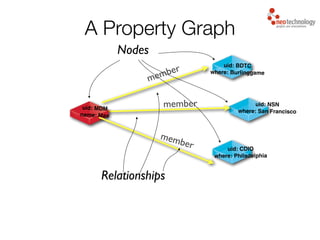
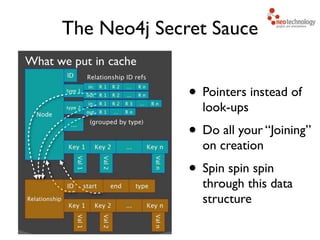
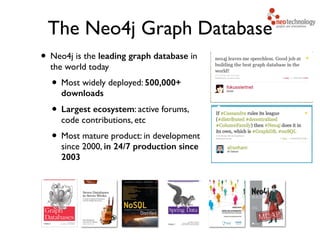
This document provides an overview of graph databases and their use cases. It begins with definitions of graphs and graph databases. It then gives examples of how graph databases can be used for social networking, network management, and other domains where data is interconnected. It provides Cypher examples for creating and querying graph patterns in a social networking and IT network management scenario. Finally, it discusses the graph database ecosystem and how graphs can be deployed for both online transaction processing and batch processing use cases.


![[DSC Europe 22] Overview of the Databricks Platform - Petar Zecevic](https://cdn.slidesharecdn.com/ss_thumbnails/petarzecevic-databricksoverview-221130080703-c60d93de-thumbnail.jpg?width=640&height=640&fit=bounds)


