Downloaded 18 times


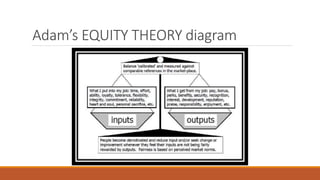


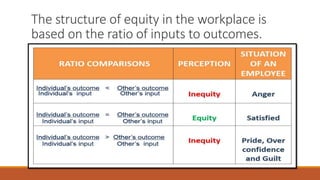


Equity theory, developed by Jane Stacy Adams in 1963, proposes that employees compare their job inputs and outcomes to others and will feel demotivated if they perceive unfairness. An employee's perception of equity is based on comparing their contributions like effort, skills, and loyalty to outcomes like pay, benefits, and recognition against relevant others, both inside and outside their organization. Feelings of inequity can decrease motivation while equitable treatment increases it.


![[GDG-Fremont] Building Multi-Agentic ecosystem using Gemini.pdf](https://cdn.slidesharecdn.com/ss_thumbnails/gdg-fremontbuildingmulti-agenticecosystemusinggemini-260601215542-0431b465-thumbnail.jpg?width=640&height=640&fit=bounds)
