Download to read offline









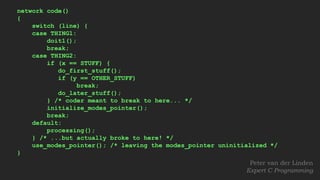



![Connection * CreateServerConnection()
{
// Declarations
char buffer[1024];
std::string cfgAddress;
unsigned long address;
std::string cfgPort;
unsigned short port;
Connection * result;
// Get address and check that its OK (throw an exception if its not)
cfgAddress = ConfigurationManager::Instance().GetValue("address");
if (cfgAddress.empty())
{
sprintf(buffer, "Configuration value missing: %s", "address");
Log::Instance().Write(buffer);
throw ConnectionException(buffer);
}
// Convert adress to bytes and check that its OK (throw an exception if its not)
address = inet_addr(cfgAddress.data());
if (address == -1)
{
sprintf(buffer, "Invalid address: %s", cfgAddress.data());
Log::Instance().Write(buffer);
throw ConnectionException(buffer);
}
// Get port and check that its OK (throw an exception if its not)
cfgPort = ConfigurationManager::Instance().GetValue("port");
if (cfgPort.empty())
{
sprintf(buffer, "Configuration value missing: %s", "port");
Log::Instance().Write(buffer);
throw ConnectionException(buffer);
}
// Convert port too bytes
port = htons(atoi(cfgPort.data()));
// Creation connection and check that its OK (throw an exception if its not)
result = new Connection(address, port);
if (!result || !result->IsOK())
{
sprintf(buffer, "Failed to connect: %s:%s", cfgAddress.data(), cfgPort.data());
Log::Instance().Write(buffer);
throw ConnectionException(buffer);
}
// Return the connection
return result;
}](/p?url=https%3A%2F%2Fimage.slidesharecdn.com%2Fcodeasrisk-170626100203%2F85%2FCode-as-Risk-30-320.jpg&__src=https%3A%2F%2Fwww.slideshare.net%2Fslideshow%2Fcode-as-risk%2F77260592%2367&__type=image)
![Connection * CreateServerConnection()
{
// Declarations
char buffer[1024];
std::string cfgAddress;
unsigned long address;
std::string cfgPort;
unsigned short port;
Connection * result;
// Get address and check that its OK (throw an exception if its not)
cfgAddress = ConfigurationManager::Instance().GetValue("address");
if (cfgAddress.empty())
{
sprintf(buffer, "Configuration value missing: %s", "address");
Log::Instance().Write(buffer);
throw ConnectionException(buffer);
}
// Convert adress to bytes and check that its OK (throw an exception if its not)
address = inet_addr(cfgAddress.data());
if (address == -1)
{
sprintf(buffer, "Invalid address: %s", cfgAddress.data());
Log::Instance().Write(buffer);
throw ConnectionException(buffer);
}
// Get port and check that its OK (throw an exception if its not)
cfgPort = ConfigurationManager::Instance().GetValue("port");
if (cfgPort.empty())
{
sprintf(buffer, "Configuration value missing: %s", "port");
Log::Instance().Write(buffer);
throw ConnectionException(buffer);
}
// Convert port too bytes
port = htons(atoi(cfgPort.data()));
// Creation connection and check that its OK (throw an exception if its not)
result = new Connection(address, port);
if (!result || !result->IsOK())
{
sprintf(buffer, "Failed to connect: %s:%s", cfgAddress.data(), cfgPort.data());
Log::Instance().Write(buffer);
throw ConnectionException(buffer);
}
// Return the connection
return result;
}](/p?url=https%3A%2F%2Fimage.slidesharecdn.com%2Fcodeasrisk-170626100203%2F85%2FCode-as-Risk-31-320.jpg&__src=https%3A%2F%2Fwww.slideshare.net%2Fslideshow%2Fcode-as-risk%2F77260592%2367&__type=image)
![Connection * CreateServerConnection()
{
// Declarations
char buffer[1024];
std::string cfgAddress;
unsigned long address;
std::string cfgPort;
unsigned short port;
Connection * result;
...
}](/p?url=https%3A%2F%2Fimage.slidesharecdn.com%2Fcodeasrisk-170626100203%2F85%2FCode-as-Risk-32-320.jpg&__src=https%3A%2F%2Fwww.slideshare.net%2Fslideshow%2Fcode-as-risk%2F77260592%2367&__type=image)


![Connection * CreateServerConnection()
{
char buffer[1024];
std::string cfgAddress;
unsigned long address;
std::string cfgPort;
unsigned short port;
Connection * result;
cfgAddress = ConfigurationManager::Instance().GetValue("address");
if (cfgAddress.empty())
{
sprintf(buffer, "Configuration value missing: %s", "address");
Log::Instance().Write(buffer);
throw ConnectionException(buffer);
}
address = inet_addr(cfgAddress.data());
if (address == -1)
{
sprintf(buffer, "Invalid address: %s", cfgAddress.data());
Log::Instance().Write(buffer);
throw ConnectionException(buffer);
}
cfgPort = ConfigurationManager::Instance().GetValue("port");
if (cfgPort.empty())
{
sprintf(buffer, "Configuration value missing: %s", "port");
Log::Instance().Write(buffer);
throw ConnectionException(buffer);
}
port = htons(atoi(cfgPort.data()));
result = new Connection(address, port);
if (!result || !result->IsOK())
{
sprintf(buffer, "Failed to connect: %s:%s", cfgAddress.data(), cfgPort.data());
Log::Instance().Write(buffer);
throw ConnectionException(buffer);
}
return result;
}](/p?url=https%3A%2F%2Fimage.slidesharecdn.com%2Fcodeasrisk-170626100203%2F85%2FCode-as-Risk-42-320.jpg&__src=https%3A%2F%2Fwww.slideshare.net%2Fslideshow%2Fcode-as-risk%2F77260592%2367&__type=image)
![Connection * CreateServerConnection()
{
char buffer[1024];
std::string cfgAddress = ConfigurationManager::Instance().GetValue("address");
if (cfgAddress.empty())
{
sprintf(buffer, "Configuration value missing: %s", "address");
Log::Instance().Write(buffer);
throw ConnectionException(buffer);
}
unsigned long address = inet_addr(cfgAddress.data());
if (address == -1)
{
sprintf(buffer, "Invalid address: %s", cfgAddress.data());
Log::Instance().Write(buffer);
throw ConnectionException(buffer);
}
std::string cfgPort = ConfigurationManager::Instance().GetValue("port");
if (cfgPort.empty())
{
sprintf(buffer, "Configuration value missing: %s", "port");
Log::Instance().Write(buffer);
throw ConnectionException(buffer);
}
unsigned short port = htons(atoi(cfgPort.data()));
Connection * result = new Connection(address, port);
if (!result || !result->IsOK())
{
sprintf(buffer, "Failed to connect: %s:%s", cfgAddress.data(), cfgPort.data());
Log::Instance().Write(buffer);
throw ConnectionException(buffer);
}
return result;
}](/p?url=https%3A%2F%2Fimage.slidesharecdn.com%2Fcodeasrisk-170626100203%2F85%2FCode-as-Risk-43-320.jpg&__src=https%3A%2F%2Fwww.slideshare.net%2Fslideshow%2Fcode-as-risk%2F77260592%2367&__type=image)
![Connection * CreateServerConnection()
{
char buffer[1024];
auto cfgAddress = ConfigurationManager::Instance().GetValue("address");
if (cfgAddress.empty())
{
sprintf(buffer, "Configuration value missing: %s", "address");
Log::Instance().Write(buffer);
throw ConnectionException(buffer);
}
auto address = inet_addr(cfgAddress.data());
if (address == -1)
{
sprintf(buffer, "Invalid address: %s", cfgAddress.data());
Log::Instance().Write(buffer);
throw ConnectionException(buffer);
}
auto cfgPort = ConfigurationManager::Instance().GetValue("port");
if (cfgPort.empty())
{
sprintf(buffer, "Configuration value missing: %s", "port");
Log::Instance().Write(buffer);
throw ConnectionException(buffer);
}
auto port = htons(atoi(cfgPort.data()));
Connection * result = new Connection(address, port);
if (!result || !result->IsOK())
{
sprintf(buffer, "Failed to connect: %s:%s", cfgAddress.data(), cfgPort.data());
Log::Instance().Write(buffer);
throw ConnectionException(buffer);
}
return result;
}](/p?url=https%3A%2F%2Fimage.slidesharecdn.com%2Fcodeasrisk-170626100203%2F85%2FCode-as-Risk-44-320.jpg&__src=https%3A%2F%2Fwww.slideshare.net%2Fslideshow%2Fcode-as-risk%2F77260592%2367&__type=image)


![Connection * CreateServerConnection()
{
char buffer[1024];
auto cfgAddress = ConfigurationManager::Instance().GetValue("address");
if (cfgAddress.empty())
{
sprintf(buffer, "Configuration value missing: %s", "address");
Log::Instance().Write(buffer);
throw ConnectionException(buffer);
}
auto address = inet_addr(cfgAddress.data());
if (address == -1)
{
sprintf(buffer, "Invalid address: %s", cfgAddress.data());
Log::Instance().Write(buffer);
throw ConnectionException(buffer);
}
auto cfgPort = ConfigurationManager::Instance().GetValue("port");
if (cfgPort.empty())
{
sprintf(buffer, "Configuration value missing: %s", "port");
Log::Instance().Write(buffer);
throw ConnectionException(buffer);
}
auto port = htons(atoi(cfgPort.data()));
auto result = std::make_unique<Connection>(address, port);
if (!result->IsOK())
{
sprintf(buffer, "Failed to connect: %s:%s", cfgAddress.data(), cfgPort.data());
Log::Instance().Write(buffer);
throw ConnectionException(buffer);
}
return result.release();
}](/p?url=https%3A%2F%2Fimage.slidesharecdn.com%2Fcodeasrisk-170626100203%2F85%2FCode-as-Risk-50-320.jpg&__src=https%3A%2F%2Fwww.slideshare.net%2Fslideshow%2Fcode-as-risk%2F77260592%2367&__type=image)
![Connection * CreateServerConnection()
{
char buffer[1024];
auto cfgAddress = ConfigurationManager::Instance().GetValue("address");
if (cfgAddress.empty())
{
sprintf(buffer, "Configuration value missing: %s", "address");
Log::Instance().Write(buffer);
throw ConnectionException(buffer);
}
auto address = inet_addr(cfgAddress.data());
if (address == -1)
{
sprintf(buffer, "Invalid address: %s", cfgAddress.data());
Log::Instance().Write(buffer);
throw ConnectionException(buffer);
}
auto cfgPort = ConfigurationManager::Instance().GetValue("port");
if (cfgPort.empty())
{
sprintf(buffer, "Configuration value missing: %s", "port");
Log::Instance().Write(buffer);
throw ConnectionException(buffer);
}
auto port = htons(atoi(cfgPort.data()));
auto result = std::make_unique<Connection>(address, port);
if (!result->IsOK())
{
sprintf(buffer, "Failed to connect: %s:%s", cfgAddress.data(), cfgPort.data());
Log::Instance().Write(buffer);
throw ConnectionException(buffer);
}
return result.release();
}](/p?url=https%3A%2F%2Fimage.slidesharecdn.com%2Fcodeasrisk-170626100203%2F85%2FCode-as-Risk-51-320.jpg&__src=https%3A%2F%2Fwww.slideshare.net%2Fslideshow%2Fcode-as-risk%2F77260592%2367&__type=image)
![Connection * CreateServerConnection()
{
char buffer[1024];
auto cfgAddress = ConfigurationManager::Instance().GetValue("address");
if (cfgAddress.empty())
{
sprintf(buffer, "Configuration value missing: %s", "address");
Log::Instance().Write(buffer);
throw ConnectionException(buffer);
}
auto address = inet_addr(cfgAddress.c_str());
if (address == -1)
{
sprintf(buffer, "Invalid address: %s", cfgAddress.c_str());
Log::Instance().Write(buffer);
throw ConnectionException(buffer);
}
auto cfgPort = ConfigurationManager::Instance().GetValue("port");
if (cfgPort.empty())
{
sprintf(buffer, "Configuration value missing: %s", "port");
Log::Instance().Write(buffer);
throw ConnectionException(buffer);
}
auto port = htons(atoi(cfgPort.c_str()));
auto result = std::make_unique<Connection>(address, port);
if (!result->IsOK())
{
sprintf(buffer, "Failed to connect: %s:%s", cfgAddress.c_str(), cfgPort.c_str());
Log::Instance().Write(buffer);
throw ConnectionException(buffer);
}
return result.release();
}](/p?url=https%3A%2F%2Fimage.slidesharecdn.com%2Fcodeasrisk-170626100203%2F85%2FCode-as-Risk-52-320.jpg&__src=https%3A%2F%2Fwww.slideshare.net%2Fslideshow%2Fcode-as-risk%2F77260592%2367&__type=image)
![Connection * CreateServerConnection()
{
char buffer[1024];
auto cfgAddress = ConfigurationManager::Instance().GetValue("address");
if (cfgAddress.empty())
{
sprintf(buffer, "Configuration value missing: %s", "address");
Log::Instance().Write(buffer);
throw ConnectionException(buffer);
}
auto address = inet_addr(cfgAddress.c_str());
if (address == -1)
{
sprintf(buffer, "Invalid address: %s", cfgAddress.c_str());
Log::Instance().Write(buffer);
throw ConnectionException(buffer);
}
auto cfgPort = ConfigurationManager::Instance().GetValue("port");
if (cfgPort.empty())
{
sprintf(buffer, "Configuration value missing: %s", "port");
Log::Instance().Write(buffer);
throw ConnectionException(buffer);
}
auto port = htons(stoi(cfgPort));
auto result = std::make_unique<Connection>(address, port);
if (!result->IsOK())
{
sprintf(buffer, "Failed to connect: %s:%s", cfgAddress.c_str(), cfgPort.c_str());
Log::Instance().Write(buffer);
throw ConnectionException(buffer);
}
return result.release();
}](/p?url=https%3A%2F%2Fimage.slidesharecdn.com%2Fcodeasrisk-170626100203%2F85%2FCode-as-Risk-53-320.jpg&__src=https%3A%2F%2Fwww.slideshare.net%2Fslideshow%2Fcode-as-risk%2F77260592%2367&__type=image)
![Connection * CreateServerConnection()
{
char buffer[1024];
auto cfgAddress = ConfigurationManager::Instance().GetValue("address");
if (cfgAddress.empty())
{
sprintf(buffer, "Configuration value missing: %s", "address");
Log::Instance().Write(buffer);
throw ConnectionException(buffer);
}
auto address = inet_addr(cfgAddress.c_str());
if (address == -1)
{
sprintf(buffer, "Invalid address: %s", cfgAddress.c_str());
Log::Instance().Write(buffer);
throw ConnectionException(buffer);
}
auto cfgPort = ConfigurationManager::Instance().GetValue("port");
if (cfgPort.empty())
{
sprintf(buffer, "Configuration value missing: %s", "port");
Log::Instance().Write(buffer);
throw ConnectionException(buffer);
}
auto port = htons(stoi(cfgPort));
auto result = std::make_unique<Connection>(address, port);
if (!result->IsOK())
{
sprintf(buffer, "Failed to connect: %s:%s", cfgAddress.c_str(), cfgPort.c_str());
Log::Instance().Write(buffer);
throw ConnectionException(buffer);
}
return result.release();
}](/p?url=https%3A%2F%2Fimage.slidesharecdn.com%2Fcodeasrisk-170626100203%2F85%2FCode-as-Risk-54-320.jpg&__src=https%3A%2F%2Fwww.slideshare.net%2Fslideshow%2Fcode-as-risk%2F77260592%2367&__type=image)


![Connection * CreateServerConnection()
{
char buffer[1024];
auto cfgAddress = ConfigurationManager::Instance().GetValue("address");
if (cfgAddress.empty())
{
sprintf(buffer, "Configuration value missing: %s", "address");
Log::Instance().Write(buffer);
throw ConnectionException(buffer);
}
auto address = inet_addr(cfgAddress.c_str());
if (address == -1)
{
sprintf(buffer, "Invalid address: %s", cfgAddress.c_str());
Log::Instance().Write(buffer);
throw ConnectionException(buffer);
}
auto cfgPort = ConfigurationManager::Instance().GetValue("port");
if (cfgPort.empty())
{
sprintf(buffer, "Configuration value missing: %s", "port");
Log::Instance().Write(buffer);
throw ConnectionException(buffer);
}
auto port = htons(stoi(cfgPort));
auto result = std::make_unique<Connection>(address, port);
if (!result->IsOK())
{
sprintf(buffer, "Failed to connect: %s:%s", cfgAddress.c_str(), cfgPort.c_str());
Log::Instance().Write(buffer);
throw ConnectionException(buffer);
}
return result.release();
}](/p?url=https%3A%2F%2Fimage.slidesharecdn.com%2Fcodeasrisk-170626100203%2F85%2FCode-as-Risk-60-320.jpg&__src=https%3A%2F%2Fwww.slideshare.net%2Fslideshow%2Fcode-as-risk%2F77260592%2367&__type=image)
![Connection * CreateServerConnection()
{
char buffer[1024];
auto cfgAddress = ConfigurationManager::Instance().GetValue("address");
if (cfgAddress.empty())
{
snprintf(buffer, sizeof buffer, "Configuration value missing: %s", "address");
Log::Instance().Write(buffer);
throw ConnectionException(buffer);
}
auto address = inet_addr(cfgAddress.c_str());
if (address == -1)
{
snprintf(buffer, sizeof buffer, "Invalid address: %s", cfgAddress.c_str());
Log::Instance().Write(buffer);
throw ConnectionException(buffer);
}
auto cfgPort = ConfigurationManager::Instance().GetValue("port");
if (cfgPort.empty())
{
snprintf(buffer, sizeof buffer, "Configuration value missing: %s", "port");
Log::Instance().Write(buffer);
throw ConnectionException(buffer);
}
auto port = htons(stoi(cfgPort));
auto result = std::make_unique<Connection>(address, port);
if (!result->IsOK())
{
snprintf(buffer, sizeof buffer, "Failed to connect: %s:%s", cfgAddress.c_str(), cfgPort.c_str());
Log::Instance().Write(buffer);
throw ConnectionException(buffer);
}
return result.release();
}](/p?url=https%3A%2F%2Fimage.slidesharecdn.com%2Fcodeasrisk-170626100203%2F85%2FCode-as-Risk-61-320.jpg&__src=https%3A%2F%2Fwww.slideshare.net%2Fslideshow%2Fcode-as-risk%2F77260592%2367&__type=image)
![Connection * CreateServerConnection()
{
char buffer[1024];
...
if (cfgAddress.empty())
{
snprintf(buffer, sizeof buffer, "Configuration value missing: %s", "address");
Log::Instance().Write(buffer);
throw ConnectionException(buffer);
}
...
if (address == -1)
{
snprintf(buffer, sizeof buffer, "Invalid address: %s", cfgAddress.c_str());
Log::Instance().Write(buffer);
throw ConnectionException(buffer);
}
...
}](/p?url=https%3A%2F%2Fimage.slidesharecdn.com%2Fcodeasrisk-170626100203%2F85%2FCode-as-Risk-62-320.jpg&__src=https%3A%2F%2Fwww.slideshare.net%2Fslideshow%2Fcode-as-risk%2F77260592%2367&__type=image)


![var cache = [
'',
' ',
' ',
' ',
' ',
' ',
' ',
' ',
' ',
' '
];
function leftPad (str, len, ch) {
// convert `str` to `string`
str = str + '';
// `len` is the `pad`'s length now
len = len - str.length;
// doesn't need to pad
if (len <= 0) return str;
// `ch` defaults to `' '`
if (!ch && ch !== 0) ch = ' ';
// convert `ch` to `string`
ch = ch + '';
// cache common use cases
if (ch === ' ' && len < 10) return cache[len] + str;
// `pad` starts with an empty string
var pad = '';
// loop
while (true) {
// add `ch` to `pad` if `len` is odd
if (len & 1) pad += ch;
// divide `len` by 2, ditch the remainder
len >>= 1;
// "double" the `ch` so this operation count grows logarithmically on `len`
// each time `ch` is "doubled", the `len` would need to be "doubled" too
// similar to finding a value in binary search tree, hence O(log(n))
if (len) ch += ch;
// `len` is 0, exit the loop
else break;
}
// pad `str`!
return pad + str;
}](/p?url=https%3A%2F%2Fimage.slidesharecdn.com%2Fcodeasrisk-170626100203%2F85%2FCode-as-Risk-91-320.jpg&__src=https%3A%2F%2Fwww.slideshare.net%2Fslideshow%2Fcode-as-risk%2F77260592%2367&__type=image)


The document discusses the complexity and risks involved in software development, emphasizing the importance of clean code and sound architecture to mitigate vulnerabilities. It references various expert opinions on reducing risk and enhancing software reliability through defined best practices and avoiding unnecessary complexity. Additionally, code snippets illustrate potential issues and how to properly manage connections in a networked environment.


