


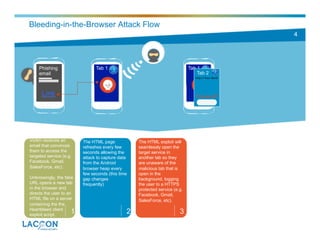

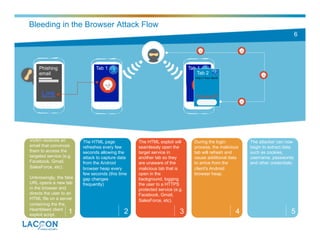


The document outlines the 'bleeding-in-the-browser' attack scenario where an attacker uses phishing emails to lure victims into accessing a malicious HTML page that exploits the Heartbleed vulnerability to capture sensitive data from their browser. The attack operates by opening a hidden tab that logs user credentials while refreshing regularly to extract data from the Android browser heap. To protect against such attacks, the document suggests mapping risks, enabling two-factor authentication, and utilizing specific tracking tools for mobile vulnerabilities.


